Kew Gardens: Royal Botanic Gardens
Take a breath of fresh air in the Royal Botanic Gardens at Kew Gardens!
From
6 €

AllTrippers
 Tourism
The Changing of the Guard in London is one of the British monarchy's most famous traditions. Outside Buckingham Palace, royal guards parade in uniform, accompanied by military bands. Other ceremonies can also be seen at Horse Guards Parade, the Tower of London and Windsor Castle.
Where and when can you watch the Changing of the Guard? The ceremony at Buckingham Palace is free and usually takes place on Mondays, Wednesdays and Fridays at 11am. At Horse Guards Parade, visitors can watch the mounted guards, while Windsor offers another traditional guard-changing ceremony in a historic setting.
Schedules may change due to official events or weather conditions. Before your visit, check the dates on the official Household Division calendar, which provides information about the military ceremonies.
Several locations offer opportunities to see the royal guards, but the ceremonies are different. Some include a military parade with a band, while others involve changing sentries or carrying out military inspections.
advertisement
| Location | Usual days and times | Admission |
|---|---|---|
| Buckingham Palace | Monday, Wednesday and Friday at 11am | Free |
| Horse Guards Parade | Full guard change on Monday, Wednesday and Friday at 11am; other ceremonies on the remaining days | Free |
| Tower of London | Sentries can be seen during opening hours | Admission ticket required |
| Windsor Castle | Guard change usually on Thursday and Saturday at around 11am for castle visitors | Street parade free; castle admission charged |
Which ceremony should you choose? Buckingham Palace is ideal for watching the traditional guard-changing ceremony with a military band. Horse Guards Parade offers a closer view of the mounted guards, usually with smaller crowds. Both experiences are free.
The Changing of the Guard at Buckingham Palace is London's best-known royal guard ceremony. It takes place outside the monarch's official London residence, where the incoming guards replace the soldiers responsible for protecting the palace.
Buckingham Palace became the monarch's principal London residence in 1837, during Queen Victoria's reign. It remains a central location for the British monarchy today, particularly for official ceremonies involving King Charles III.

The main ceremony usually takes place on Mondays, Wednesdays and Fridays at 11am. The first troop movements begin at around 10.30am, particularly at Wellington Barracks and St James's Palace.
The ceremony lasts approximately 45 minutes and requires neither a ticket nor a reservation. The most convenient Underground stations are Green Park, St James's Park, Victoria and Hyde Park Corner.
The military calendar distinguishes between full guard changes (Guard Change) and inspections (Captain's Inspection), which do not necessarily include a military band. Dates may also change due to state visits or royal events.
The Changing of the Guard involves the official handover of duties between two military detachments. The outgoing guard (Old Guard) finishes its duty, while the incoming guard (New Guard) takes over.
The soldiers assemble at Wellington Barracks and St James's Palace before marching towards Buckingham Palace. Outside the palace, the two guards perform a series of military movements and formally hand over their duties, accompanied by a military band.
The musical repertoire is not limited to traditional marches: the bands have also performed music from films and television series, including James Bond, Star Wars and Game of Thrones.
Several locations offer good views of the ceremony:
Try to arrive by 10am, or earlier during school holidays. With young children, watching the soldiers march through the streets is often preferable to waiting for a long time outside the palace gates.
Watching the Changing of the Guard is free. However, visiting the State Rooms at Buckingham Palace is a separate activity, available at certain times of the year. Ticket options and admission conditions are explained in our Buckingham Palace guide.
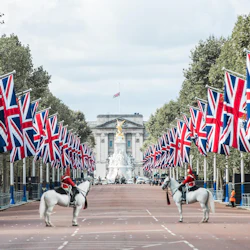
Just a short walk from Buckingham Palace, Horse Guards Parade offers another military tradition: the Changing of the King's Life Guard.
The ceremony is performed by soldiers of the Household Cavalry, recognisable by their horses, metal breastplates and plumed helmets.
Located near Whitehall, between Trafalgar Square and Parliament, Horse Guards Parade also hosts major official ceremonies, including Trooping the Colour, the annual parade celebrating the monarch's official birthday.

Horse Guards Parade hosts several types of ceremonies, depending on the day of the week.
| Day | Ceremony | Usual time |
|---|---|---|
| Monday, Wednesday and Friday | Full Changing of the King's Life Guard | 11am |
| Tuesday and Thursday | The Patrol | Between 10.30am and 11.15am |
| Saturday | Guard inspection | 11am |
| Sunday | Guard inspection | 10am |
| Every day | End-of-duty inspection | 4pm |
On full guard-changing days, the mounted soldiers leave Hyde Park Barracks at around 10.30am and make their way to Horse Guards Parade, passing through Constitution Hill and The Mall.
On the parade ground, the incoming guard replaces the outgoing guard during a ceremony lasting approximately 30 minutes. Unlike at Buckingham Palace, the movements of the horses, military commands and trumpet calls generally take the place of a full military band.
Mounted sentries can also be seen at the Whitehall entrance to Horse Guards, usually from 10am to 4pm, with sentries changing approximately every hour.
The ceremony is free. The nearest Underground stations are Charing Cross, Embankment and Westminster.
Every day, Horse Guards also hosts a short end-of-duty inspection known as the Four O'Clock Parade or Dismounting Ceremony.
At 4pm, an officer inspects the guards before the end of their public duties. The mounted sentries then leave their posts.
This ceremony is less elaborate than the main guard change, but it is an interesting alternative if you cannot visit in the morning.

To watch the ceremonies, stand on the Horse Guards Parade ground. The mounted sentries can be seen on the Whitehall side. Respect the barriers and keep your distance: the horses are working animals and the soldiers are on duty.
The Tower of London also has its own military garrison. The guards carry out security duties and take part in several ceremonial traditions.
Unlike Buckingham Palace, the Tower of London does not offer a large public guard-changing ceremony with a military band at a fixed time. However, visitors can see sentries in uniform outside the Jewel House, which houses the Crown Jewels, and the King's House.

The soldiers work alongside the Yeoman Warders, the Tower's famous guardians, nicknamed Beefeaters.
The garrison takes part in several traditions, including the Ceremonial Opening and the Ceremony of the Keys, which takes place every evening when the fortress is locked.
The Ceremony of the Keys is a centuries-old tradition. Accompanied by a military escort, a Yeoman Warder locks the fortress gates according to a ritual dating back to the Middle Ages.
The ceremony takes place in the evening, with visitors admitted from 9.30pm and the event scheduled to finish at around 10.05pm. A separate ticket must be booked in advance: this experience is not included in standard Tower of London admission.
Bookings can be made on the official Historic Royal Palaces website.
To see the sentries during the day, you need an admission ticket to the Tower of London. The nearest Underground station is Tower Hill.
Located west of London, Windsor Castle also hosts a royal guard-changing ceremony.
This royal residence, occupied by British monarchs for more than 900 years, was particularly dear to Queen Elizabeth II and her husband, Prince Philip.
The ceremony is similar to the one at Buckingham Palace, but takes place in a different setting: the soldiers march through the streets of Windsor before entering the castle grounds.

The Changing of the Guard at Windsor Castle can usually be seen by castle visitors on Thursdays and Saturdays at around 11am.
On Mondays and Fridays, a shorter ceremony known as the Captain's Inspection may also take place inside the castle. This is not a full guard change with a parade.
The military calendar sometimes includes ceremonies on other days, particularly certain Tuesdays. However, as the castle is normally closed to visitors on Tuesdays and Wednesdays, these ceremonies are not necessarily accessible to the public inside the grounds.
Days and times may change due to royal events, military requirements or weather conditions. Check the official calendar before your visit.
On full guard-changing days, the soldiers usually leave Victoria Barracks and march through the streets of Windsor, particularly along Sheet Street and High Street, before reaching the castle.
The street parade is free to watch: no ticket is required to see the guards marching past.
The best viewing locations are generally:
The formal handover of duties then takes place in the castle courtyard, known as the Quadrangle. To watch this part of the ceremony, you need a valid admission ticket and must comply with the access conditions on the day.
Windsor is easy to reach from London: allow around an hour by train from London Waterloo to Windsor & Eton Riverside. Another route departs from London Paddington, with a change at Slough for Windsor & Eton Central.
If you would like to visit the State Apartments and St George's Chapel after the ceremony, you can find ticket options and practical information in our Windsor Castle guide.
The soldiers who take part in the Changing of the Guard are not simply ceremonial performers. They are professional soldiers in the British Army who carry out ceremonial duties but may also be deployed on military operations.
The Foot Guards belong to five historic regiments of the Household Division, recognisable by their red tunics and tall black bearskin caps:
advertisement
The mounted guards belong to two regiments of the Household Cavalry: the Life Guards, recognisable by their red tunics and helmets with white plumes, and the Blues and Royals, who wear blue tunics and helmets with red plumes.
The famous black cap worn by the Foot Guards, known as a bearskin, is approximately 45 centimetres tall. Traditionally made from black bear fur, it has been associated with British guard uniforms since the 19th century, particularly following the victory at Waterloo in 1815.
Another interesting detail: the flag flying above Buckingham Palace indicates whether the monarch is present. The Royal Standard flies when the King is in residence, while the Union Flag is generally flown when he is away.
For a first visit to London, Buckingham Palace is the obvious choice: the ceremony is impressive, accompanied by a military band and takes place in an instantly recognisable setting.
With children, Horse Guards Parade can be an interesting alternative. The horses often capture their attention, and the ceremony is generally less crowded. If you are planning a family trip, our guide to visiting London with children will help you find other age-appropriate activities.
Windsor Castle is better suited to visitors who want to combine the ceremony with a visit to a royal residence, while the Tower of London offers an opportunity to see royal sentries in an exceptional historic setting.
You can visit both Buckingham Palace and Horse Guards Parade in the same morning, but you cannot watch both main guard-changing ceremonies in full when they both start at 11am.
Ceremonies may be modified or cancelled in heavy rain, adverse weather conditions or for operational reasons. Light rain does not necessarily mean cancellation, but parts of the programme may be adapted.
A cancelled ceremony is not automatically rescheduled. It is therefore best to check the official information on the morning of your visit.
No. The public ceremonies at Buckingham Palace and Horse Guards Parade, as well as the street parades in Windsor, are free and do not require a reservation.
However, visits to royal residences and certain special experiences, such as the Ceremony of the Keys at the Tower of London, require a ticket.
The main Changing of the Guard ceremony at Buckingham Palace does not usually take place every day. Horse Guards Parade, however, hosts daily ceremonial activities, although the full mounted guard change is normally held only three times a week.
Exact dates are listed on the official Household Division calendar.
The Changing of the Guard in London offers a free opportunity to experience one of the United Kingdom's most iconic military traditions.
The ceremony at Buckingham Palace, usually held on Mondays, Wednesdays and Fridays at 11am, remains the most famous. At Horse Guards Parade, visitors can watch the mounted guards and several ceremonies throughout the week.
Windsor Castle offers another option, with a free parade through the town's streets. At the Tower of London, visitors can see royal sentries in a unique historic setting.
Whichever ceremony you choose, check the official calendar before your visit and arrive early enough to find a good viewing spot.
Planning your trip? These are the tours and tickets travellers book most.