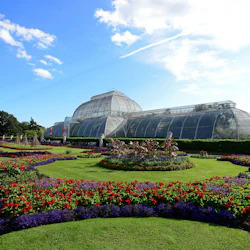
Kew Gardens: Royal Botanic Gardens
Take a breath of fresh air in the Royal Botanic Gardens at Kew Gardens!
From
6 €

AllTrippers
 Education
School holidays in the UK for 2026-2027 vary depending on the nation, local authority and sometimes the individual school. In England, the school year is divided into three terms, separated by several holiday periods known as half-terms; the school year generally begins in early September.
The United Kingdom does not have a single national school calendar. England, Scotland, Wales and Northern Ireland each follow their own system. In England and Scotland in particular, dates depend largely on local authorities, while Wales and Northern Ireland also publish official reference calendars.
Whether you live in the UK, are preparing to move there or are planning a family trip to London, knowing the school holiday dates can help you anticipate busier periods, plan your journeys and organise the school year more easily.
In practice, dates may vary depending on the nation, local council, city and school. Before booking a trip, it is therefore recommended to check the official calendar of the school concerned.
In England, the 2026-2027 school holiday dates are not set by a single national calendar. For state schools under local authority control, each local council publishes its own calendar. The dates below should therefore be considered reference dates commonly found in English school calendars for the 2026-2027 academic year.
advertisement
| Period | Reference dates 2026-2027 | What to know |
|---|---|---|
| Start of the school year | Tuesday 1 or Wednesday 2 September 2026 | The exact date depends on the local council and may also be affected by INSET days. |
| Autumn half-term | Monday 26 to Friday 30 October 2026 | Classes generally resume on Monday 2 November 2026. |
| Christmas holiday | Monday 21 December 2026 to Friday 1 January 2027 | Classes generally resume in early January, depending on the school's calendar. |
| Spring half-term | Monday 15 to Friday 19 February 2027 | Classes generally resume on Monday 22 February 2027. |
| Easter holiday | Friday 26 March to Friday 9 April 2027 | This period includes Easter weekend, with Good Friday on 26 March and Easter Monday on 29 March 2027. |
| Summer half-term | Monday 31 May to Friday 4 June 2027 | Monday 31 May 2027 is also the Spring Bank Holiday. |
| Start of the summer holiday | From the second half of July 2027 | The end of the school year varies depending on the local council and individual school. |
Good to know: this table provides an overview of the main school holiday periods in England, but it does not replace your school's own calendar. Before booking a trip, always check the dates with your school or on your local council's website. You should also check the UK public holidays in 2026 and 2027, as some Bank Holidays may affect transport, opening hours and visitor numbers.
Local authorities set the dates for community schools and certain other state schools under their control. However, academies, free schools, some faith or foundation schools and independent schools may set their own calendars. Two schools in the same city may therefore have slightly different holiday dates.
You should also take INSET days (In-Service Education and Training days) into account. These are days mainly dedicated to staff training and professional development, during which pupils do not attend school. They may explain why pupils return one or more days after the official start of a term.
To find the exact dates for your school, use the official School term and holiday dates service on GOV.UK. It allows you to find the calendar published by your local council using your postcode. For academies and independent schools, check the school's own website directly.
The English school calendar is divided into three terms: the Autumn Term, Spring Term and Summer Term. Each term is generally divided into two teaching periods separated by a one-week holiday known as half-term.
| School year structure | How it works |
|---|---|
| Autumn Term | From early September until the Christmas holiday, with a one-week half-term in late October. |
| Spring Term | From early January until the Easter holiday, with a one-week half-term in February. |
| Summer Term | From spring until late July, with a one-week half-term in late May before the summer holiday. |
In English maintained schools, schools must be open for at least 380 sessions, which generally corresponds to 190 days of attendance for pupils during the school year.
Additional days may be set aside for staff training or professional development, during which pupils do not attend school.
There is no single national timetable that applies to every school. Each school determines how its school day and school week are organised.
For mainstream state-funded schools, the English government nevertheless sets a non-statutory expectation of at least 32.5 hours per week. This covers the time between morning registration and the official end of the school day, including breaks. Exact school hours are still determined by each individual school.
If you need to organise transport, childcare or extracurricular activities, check your school's exact timetable. Start and finish times, as well as clubs before or after school, can vary significantly from one school to another.
Not always. Independent schools have greater freedom to set their own holiday dates and may organise their terms slightly differently from state schools.
Boarding schools may also schedule periods known as Exeats. These are short breaks, often built around a weekend, during which boarding pupils may leave the school.
An Exeat is not the same as a half-term or an INSET day. If your child attends a boarding school, check the school's calendar specifically for Exeat dates and departure and return times.
School holidays are not the same throughout the UK. Scotland, Wales and Northern Ireland each have their own system, and their dates may differ significantly from those in England.
| Nation | How the calendar is organised | What to know for 2026-2027 |
|---|---|---|
| Scotland | Each local authority publishes its own calendar. | There is no single school calendar for the whole of Scotland. Dates must be checked with the relevant council. |
| Wales | Dates are largely coordinated between local authorities, with some variations. | The reference start date is 1 September 2026 and the autumn half-term runs from 26 to 30 October 2026. |
| Northern Ireland | The Department of Education publishes a reference calendar. | The school year begins on 1 September 2026, with specific holidays around Halloween, February, Easter and certain public holidays. |
In Scotland, dates vary between local authorities. The school year may begin earlier than in England and the summer holiday generally starts earlier.
Visit the official School term and holiday dates in Scotland page and select your council to find the 2026-2027 dates that apply to your school.
In Wales, school dates are largely coordinated between local authorities, although some variations remain. For 2026-2027, the school year begins on Tuesday 1 September 2026 and the autumn half-term runs from Monday 26 to Friday 30 October 2026. Approved dates may nevertheless differ slightly between local authorities, particularly for some spring periods and the end of the school year.
Detailed calendars are available on the official Welsh Government school term dates 2026-2027 page.
In Northern Ireland, the Department of Education publishes a reference calendar for the academic year.
| Period | Dates 2026-2027 |
|---|---|
| Return after the summer holiday | 1 September 2026 |
| Halloween holiday | 29 and 30 October 2026 |
| Christmas and New Year | 21 December 2026 to 1 January 2027 |
| Mid-term | 11 and 12 February 2027 |
| St Patrick's Day | 17 March 2027 |
| Easter holiday | 25 March to 2 April 2027 |
| May Day | 3 May 2027 |
| Spring Bank Holiday | 31 May 2027 |
| Start of the summer holiday | 1 July 2027 |
These dates are based on the reference calendar published by the Northern Ireland Department of Education. Schools may also schedule staff training days. For the 2026-2027 academic year, three additional closure days linked to the TransformED NI programme are also planned for 25 September 2026, 25 January 2027 and 4 May 2027.
School holidays in London follow the same general principle as the rest of England: there is no single calendar for the entire capital. Dates are set by the London Borough Councils for state schools under their authority.
School holiday dates in London are generally very similar to those seen elsewhere in England, but they may vary slightly between boroughs. The main differences usually concern the start of the school year, the end of the academic year and certain INSET days.
London has 32 boroughs as well as the City of London. Academies, free schools and independent schools may follow a different calendar from their borough.
To find the exact dates, the easiest option is to search using your school's postcode. The GOV.UK service identifies the relevant local council and directs you to its official school calendar.
Use the School term and holiday dates service and enter the school's postcode. If your child attends an academy, free school or independent school, also check the calendar published directly by the school.
School holidays are a particularly popular time for families to visit London. Museums, attractions and West End theatres regularly offer activities, workshops and shows suitable for children.
However, some school holiday periods also coincide with higher demand for attractions, hotels and shows. It is therefore advisable to organise your trip in advance.
Family visitor numbers generally increase during the main UK school holiday periods, particularly half-terms, the Christmas holiday, Easter and the summer holiday.
There is no single week when every schoolchild in the UK is on holiday. Differences between nations, councils and schools can spread busy periods across several weeks.
If your dates are flexible, check the school calendars before booking. Travelling just before or after a half-term can help you avoid some of the busiest periods.
To plan your stay, discover our guide to visiting London with children as well as the best musicals to see in London with children.
The most popular family attractions and shows can sell out during the school holidays. Booking in advance can help you secure the most suitable time slots.
During the school holidays, remember to compare prices for attractions, shows and sightseeing passes before booking. AllTrippers allows you to compare several offers, helping you save time and find the best available prices.
No. Each of the four nations has its own system. Scotland uses local calendars, Wales largely coordinates dates between local authorities, and Northern Ireland publishes a separate reference calendar.
advertisement
No. Schools under a local council generally follow that council's calendar, while academies, independent schools and some other schools may set their own dates.
Use the official GOV.UK school term and holiday dates service and enter the school's postcode. For an academy, free school or independent school, also check the school's own calendar.
The summer holidays generally last around six weeks. They usually begin in the second half of July and end in early September, depending on the local council and the school.
In maintained schools, schools must be open for at least 380 sessions per academic year, which generally corresponds to 190 days of pupil attendance. Additional days may be used for staff training without pupils being present.
There are no national school hours that apply to every school. Many schools start at around 8:30-9:00 am and finish in the middle of the afternoon, but exact hours vary from one school to another.
For mainstream state-funded schools, the English government sets a non-statutory expectation of at least 32.5 hours per week. Exact timetables are still determined by individual schools.
Calendars vary between local councils and individual schools. INSET days, which are mainly used for staff training, may also delay the start of term or the return to school after a holiday.
An Exeat is a short break scheduled by some boarding schools during which pupils may leave the school. Dates are specific to each school and do not necessarily coincide with half-terms.
Visitor numbers generally increase during half-terms, the Christmas holiday, Easter and the summer holidays. As calendars vary between regions and schools, busy periods may extend over several weeks.
As soon as your dates are confirmed, particularly for Christmas, Easter, half-terms and the summer holidays. The most popular hotels, attractions and family shows can sell out during these periods.
In England, use GOV.UK and your local council's calendar. In Scotland, use mygov.scot; in Wales, the Welsh Government website; and in Northern Ireland, the Department of Education. For an independent school or academy, check the school's official calendar directly.
The UK school holiday calendar varies depending on the nation, local council and sometimes the individual school. England and Scotland rely largely on local calendars, while Wales and Northern Ireland use more coordinated or reference calendars.
Whether your child attends a state school, an academy, an independent school or a boarding school, always check the school's official calendar before organising a trip or holiday.
Planning a trip to London during the school holidays? Read our guide to visiting London with children and discover the best musicals to see in London with children. You can also compare prices for attractions, shows and sightseeing passes on AllTrippers before booking.
Planning your trip? These are the tours and tickets travellers book most.