Dubai, often dubbed the "city of the future", is a metropolis that continually amazes with its dynamism and modernity. With its impressive skyscrapers, gigantic shopping malls, and unique tourist attractions, the city attracts millions of visitors each year. However, to fully enjoy everything Dubai has to offer, it's essential to understand the available transportation options. Whether you're a resident or a tourist, knowing how to navigate this sprawling urban area can greatly enhance your experience.
This article will guide you through the various transportation solutions in Dubai, from public transport to more eco-friendly options, including taxis and rental cars. Follow the guide to plan your travels with ease!
The Dubai Metro
The Dubai Metro is one of the most efficient and modern means of transport in the city. Inaugurated in 2009, it forms the backbone of the public transport network in Dubai, offering a fast and economical alternative to frequent traffic jams. With fully automated trains and state-of-the-art infrastructure, the Dubai Metro stands out for its reliability and comfort.
Metro lines
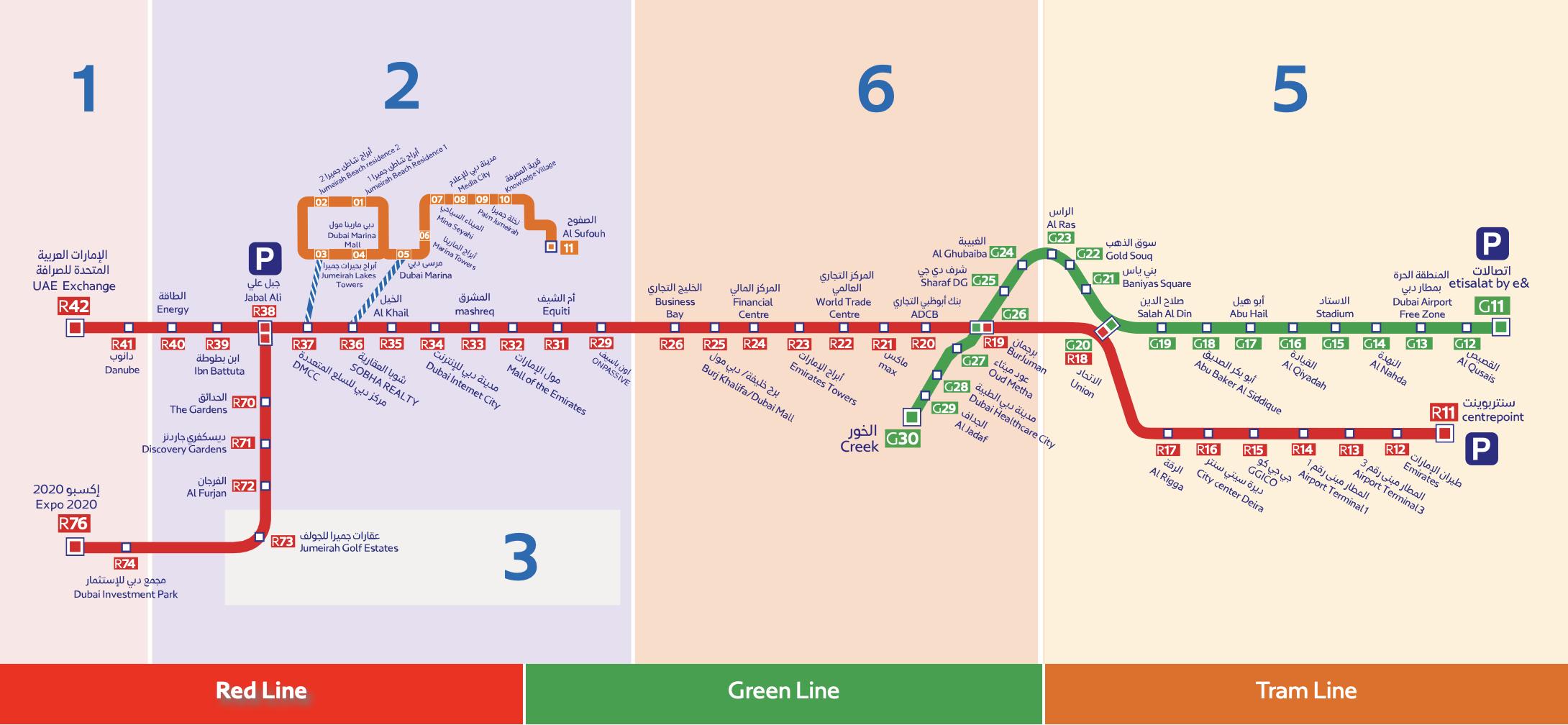
The Dubai Metro consists of two main lines:
The Red Line: which stretches approximately 52 km, from Rashidiya to Jebel Ali, with stops at iconic locations such as The Dubai Mall, the Burj Khalifa, and the Dubai International Airport. It is the most used line by tourists and residents, particularly due to its extensive coverage of commercial and tourist areas.
The Green Line: which extends approximately 23 km and connects the eastern districts of Dubai, from Etisalat to Creek, passing through historical areas like Deira and Al Fahidi. These two lines intersect at two major stations: Union and BurJuman, facilitating transfers between different parts of the city.
According to development plans, new extensions are planned to further increase the reach of the Dubai Metro, making this transport option even more convenient for all users.
Map of Dubai metro and tram lines
Operating hours
The Dubai Metro is known for its punctuality and reliability, with well-defined operating hours that allow passengers to plan their journeys with confidence. The metro operates 7 days a week, with slightly different hours depending on the day of the week:
advertisement
Monday to Thursday: from 5 AM to 1:15 AM the next morning
Friday: from 10 AM to 1:15 AM the next morning
Saturday: from 5 AM to 1:15 AM the next morning
Sunday: from 8 AM to 1:15 AM the next morning
For special events or public holidays, the hours may vary, so it is always advisable to check the schedule on the official Dubai Metro website or via the dedicated mobile apps.
The frequency of train services is also a major advantage of the Dubai Metro, with intervals of 4 to 7 minutes between each train during peak hours, and 7 to 10 minutes during off-peak hours.
Fares and transport cards
The Dubai Metro offers a range of fares and transport cards tailored to the diverse needs of users. The fare system is based on a zonal structure, dividing the city into different fare zones. Therefore, fares vary depending on the number of zones crossed during the journey:
Travel within one zone: approximately 3 AED (about 0.75 €)
Travel between two adjacent zones: approximately 5 AED (about 1.25 €)
Travel crossing three or more zones: approximately 7.5 AED (about 1.90 €)
To simplify payments, several transport cards, called Nol cards, are available:
Nol Red Ticket: a paper card rechargeable up to 10 trips, ideal for tourists.
Nol Silver Card: a rechargeable card valid for 5 years, offering reduced fares and great flexibility.
Nol Gold Card: similar to the Silver card, but offering access to Gold Class cabins, with premium seating.
Nol Blue Card: a personalized card requiring prior registration, offering additional discounts and benefits for frequent users.
These cards can be recharged online, via mobile apps, or at vending machines available in stations, metro stations, and main bus stops. They can also be used for other public transport means, such as buses and trams.
Buses in Dubai
Buses in Dubai offer another affordable and practical alternative for getting around this vast and ever-expanding city. The bus network, managed by the Roads and Transport Authority (RTA), covers most of Dubai's neighborhoods, including residential, commercial, and tourist areas. With over 1,500 modern and air-conditioned buses, Dubai's bus service is renowned for its punctuality and accessibility.
Bus network and routes
The Dubai bus network is one of the most extensive and well-organized in the region, ensuring optimal coverage of the city. It is structured around several types of routes to meet the different needs of users:
Main lines: these routes serve the main thoroughfares and attractive areas of Dubai, such as Downtown Dubai, Jumeirah, and Dubai Marina. They operate with high frequency, especially during peak hours.
Local service lines: these allow access to residential and peripheral areas of Dubai, ensuring a connection with the main lines and metro stations.
Express lines: designed for long journeys, these routes reduce the number of stops to offer fast service between key points in the city.
Night lines: operating after normal bus and metro hours, these routes ensure safe and reliable transport options for late travelers.
Line identification is facilitated by clear signage and indications in multiple languages, including English and Arabic. Bus stops are generally well-equipped with air-conditioned shelters, providing extra comfort in Dubai's extreme weather conditions.
To plan your trips, it is recommended to use mobile apps or online platforms offered by the RTA, which provide real-time information on schedules and routes.
Fares and payment methods
The bus fare system in Dubai is designed to be affordable and easy to understand. It is based on a zonal structure similar to that of the metro, with the fare depending on the number of zones crossed:
Travel within one zone: about 3 AED (approximately 0.75 €)
Travel between two adjacent zones: about 5 AED (approximately 1.25 €)
Travel crossing three or more zones: about 7.5 AED (approximately 1.90 €)
To facilitate payments, Dubai buses also use the Nol card system, which is compatible with all public transport in the city:
Nol Red Ticket: a paper card rechargeable up to 10 trips, designed mainly for tourists and occasional users.
Nol Silver Card: a convenient rechargeable card for residents, valid for 5 years and offering reduced fares.
Nol Gold Card: offering the same benefits as the Silver card, with additional access to the Gold sections of buses.
Nol Blue Card: a personalized card with additional benefits for frequent users, requiring prior registration.
These cards can be recharged online, via mobile apps, or at vending machines available in stations, metro stations, and major bus stops.
Tips for using buses
Using buses in Dubai can be a pleasant and convenient experience if you follow a few simple tips. Here are some tricks to optimize your bus journeys in this dynamic city:
Plan your trip in advance: Use mobile apps like RTA Dubai or the RTA website to check real-time schedules and routes. This will help you avoid unnecessary waiting times and choose the best route for your destination.
Have a valid Nol card: Make sure you always have a recharged Nol card with you. Bus drivers do not accept cash payments, so a valid Nol card is essential for boarding.
Respect designated waiting areas: Wait for the bus in designated and air-conditioned shelters for your comfort, especially during the hot months. The shelters are also equipped with information screens displaying the schedules of upcoming buses.
Board and alight at indicated stops: Make sure to board through the front door and alight through the rear door, unless otherwise indicated. This allows for smooth passenger flow and avoids congestion.
Observe courtesy rules: Give up your seat to the elderly, pregnant women, and passengers with special needs. Keep the bus clean by avoiding eating or drinking on board.
Prepare for your stop: A few stops before your destination, press the stop button to inform the driver of your intention to alight. This ensures the bus stops at your desired stop.
Avoid peak hours: If possible, plan your trips outside of peak hours (7:00-9:00 AM and 5:00-7:00 PM) to avoid overcrowded buses and enjoy a more comfortable ride.
By following these tips, you can use Dubai's buses more efficiently and pleasantly, while contributing to an orderly and respectful public transport environment.
Taxis in Dubai
Taxis in Dubai are one of the most popular and convenient modes of transport in the city. With an extensive fleet of well-maintained vehicles equipped with air conditioning, taxis offer a comfortable and direct alternative to public transport. Taxi services are managed by the Roads and Transport Authority (RTA) as well as private companies, ensuring 24-hour availability in all neighborhoods of Dubai. Whether it's a quick trip to a shopping mall, a ride to the airport, or a visit to tourist attractions, taxis are a flexible and reliable option. In this section, we will discuss the availability and types of taxis, fare rates, and practical tips for taking a taxi in Dubai.
Availability and types of taxis
In Dubai, taxis are ubiquitous and available almost everywhere, at any time of the day or night. Whether you are in the bustling downtown or in quieter residential areas, finding a taxi is generally easy and quick. Taxis can be hailed directly on the street, booked via mobile apps like Dubai Taxi Corporation (DTC) or Careem, or called from taxi stands located near shopping centers, hotels, and major metro stations.
There are several types of taxis in Dubai, each catering to specific traveler needs:
Standard taxis: These taxis, recognizable by their beige roofs, make up the majority of vehicles in circulation. They offer rides at rates regulated by the RTA and have meters to ensure a fair price.
Luxury taxis: Identifiable by their more elegant appearance and black roofs, these taxis offer a premium service with high-end vehicles like Lexus. They are ideal for those seeking more comfort and luxury.
Taxis dedicated to women and families: These taxis have pink roofs and are driven by female drivers. They are specially designed for women traveling alone and families, offering a sense of security and comfort.
Taxis for people with reduced mobility: Equipped to accommodate passengers in wheelchairs, these taxis ensure adapted and safe transport for people with reduced mobility.
Limousines: Offering a luxury service for special occasions, these vehicles are generally high-end sedans and must be booked in advance. Rates are set by the provider and are not regulated by the RTA.
The wide range of taxi types available in Dubai allows every traveler to find a mode of transport suited to their specific needs, ensuring a pleasant and hassle-free travel experience.
Taxi fare rates
Taxi fare rates in Dubai are set by the Roads and Transport Authority (RTA), ensuring transparent and fair pricing for all passengers. Standard and luxury taxis use digital meters to calculate the cost of rides based on the distance traveled and time spent. Here is a breakdown of the rates for standard taxis:
Pick-up: Approximately 5 AED during the day (6:00 AM - 10:00 PM) and approximately 7 AED at night (10:00 PM - 6:00 AM).
Rate per kilometer: Approximately 2 AED per kilometer traveled.
Waiting time: Approximately 0.50 AED per minute of waiting.
For luxury taxis, pick-up and mileage rates may be slightly higher due to the level of comfort and additional services offered. For taxis dedicated to women and families, as well as taxis for people with reduced mobility, the rates are similar to those of standard taxis.
There are also additional fees in certain situations:
Taxi call: Reservations made via phone or mobile app may include a booking fee of approximately 4 AED.
Minimum fare: A minimum fare of 12 AED is generally applied for all rides.
Transport to the airport: A pick-up from Dubai International Airport includes a surcharge of 25 AED.
To estimate the cost of a taxi ride in advance, it is recommended to use online fare calculators or mobile apps like Careem and Uber, which offer accurate estimates based on distance and traffic conditions. By using these tools and knowing the standard rates, you can travel by taxi in Dubai with confidence, knowing you are paying a fair and regulated price.
Tips for taking a taxi
Taking a taxi in Dubai is generally an easy and pleasant experience, especially if you follow a few practical tips to optimize your ride:
Use booking apps: Apps like Careem, Uber, or Dubai Taxi allow you to book a taxi in advance, track your driver's arrival in real-time, and estimate the cost of your ride. These apps also offer the convenience of paying directly via your phone.
Prefer official taxis: Make sure to take an official taxi authorized by the RTA to ensure a secure service and regulated fares. Official taxis are easily recognizable by their beige roof, black (for luxury taxis), or pink (for taxis dedicated to women and families).
Make a note of the taxi number: In case of a problem or lost item, having the taxi number handy greatly facilitates tracking and recovering your belongings.
Opt for taxi stands: If possible, head to taxi stands located in busy places like shopping malls, hotels, or metro stations, where taxi availability is generally high.
Communicate your destination clearly: Clearly indicate your destination to the driver, using known landmarks if necessary. The language barrier can sometimes pose challenges, but most taxi drivers in Dubai are familiar with the city's main attractions and neighborhoods.
Check the meter: Ensure the meter is activated at the start of your ride to avoid any confusion about the fare. If you notice the meter is not on, ask the driver to turn it on or consider taking another taxi.
Have cash or a Nol card: Although most taxis accept card payments, it's always handy to have cash for small rides or additional fees like tips.
Observe courtesy rules: Sit in the back of the taxi, wear a seatbelt, and follow driving rules. Respectful behavior towards the driver enhances the ride experience for everyone.
By following these tips, you can fully enjoy taxi services in Dubai, with peace of mind and safety.
Rental cars
Renting a car in Dubai can be an excellent option for those who wish to explore the city and its surroundings at their own pace. With well-maintained roads, clear signage, and modern infrastructure, driving in Dubai is relatively easy and enjoyable. Whether you are a tourist eager to visit famous attractions or an expatriate needing flexibility for your daily commutes, a rental car offers unparalleled freedom. In this section, we will examine the different options for renting a car in Dubai, local driving rules, parking, as well as the costs and types of vehicles available. Follow our tips for a successful driving experience in this fascinating city.
Where to rent a car in Dubai
Renting a car in Dubai is a simple and accessible process thanks to the presence of numerous car rental agencies, both international and local. Here are some popular options for finding a rental car:
Airports: Car rental agencies are easily accessible at Dubai airports, including Dubai International Airport (DXB) and Al Maktoum Airport (DWC). Renting a car directly at the airport offers the convenience of starting your journey as soon as you arrive.
Hotels: Many hotels in Dubai offer car rental services directly from their premises. This allows for a combination of comfort and convenience, especially if you are staying in a high-end establishment.
Shopping malls: Major shopping malls like the Dubai Mall, Mall of the Emirates, and Ibn Battuta Mall host several car rental agencies, allowing you to rent a vehicle while enjoying your shopping spree.
Online agencies: Booking a car online is often the most convenient and economical option. Platforms like Rentalcars, Kayak, and the websites of major international agencies such as Hertz, Avis, and Europcar allow you to compare rates and book in advance.
Central districts: Car rental offices are scattered throughout the city, particularly in areas like Downtown Dubai, Deira, and Jumeirah. These local agencies often offer increased flexibility and personalized options.
When renting a car in Dubai, don't forget to check the general rental conditions, including age and driving license requirements. Most agencies require a valid driving license for at least one year and a credit card for the deposit. By exploring these different options, you will surely find a rental solution that meets your needs and allows you to fully enjoy your stay in Dubai.
Driving rules and parking
To drive safely and in compliance with local laws in Dubai, it is essential to know and follow certain driving and parking rules. Here is a guide to help you navigate the roads of this dynamic city:
Driving rules
Driving license: Visitors can use an international driving license in conjunction with their national driving license. Expatriate residents must obtain an Emirati driving license.
Speed limits: Speed limits in Dubai vary depending on the types of roads. Generally, limits are 60 to 80 km/h in the city, and 100 to 120 km/h on highways. Automatic radars are widely deployed to monitor speeding.
Seat belt: Wearing a seat belt is mandatory for all vehicle occupants. Violations result in severe fines.
Use of mobile phones: It is illegal to drive using a mobile phone without a hands-free device. Offenders face fines and penalty points on their license.
Drunk driving: Zero tolerance applies to driving under the influence of alcohol. Any presence of alcohol in the blood can result in significant fines, vehicle confiscation, or even imprisonment.
Right of way: Roundabouts operate differently from many other countries. In Dubai, vehicles already in the roundabout have the right of way.
Respect for traffic lights: Running a red light is a serious offense and is heavily penalized. Traffic lights are strictly monitored by cameras.
Parking
Paid parking zones: Most commercial, tourist, and residential areas impose parking fees. Ticket machines and mobile app payments (RTA Dubai) are common methods for settling your parking.
Free parking: Some residential areas offer free parking, although often limited in space. Shopping malls generally offer free parking for a determined period.
Strict regulations: Illegal parking, including on sidewalks, in spaces reserved for disabled persons without authorization, or in front of fire hydrants, is severely punished by fines and vehicle impoundment.
Underground and surface parking: Dubai offers numerous underground and surface parking lots, particularly in tourist areas and major shopping malls. These parking lots are secure and often air-conditioned.
By respecting these driving rules and staying informed about parking regulations, you can enjoy a smooth and pleasant driving experience in Dubai.
Costs and types of vehicles
Renting a car in Dubai can vary in cost depending on several factors such as the rental duration, the type of vehicle, and the chosen rental agency. Here is a general overview of the costs and types of vehicles available:
Rental costs
Short-term rental: For daily rentals, prices for small economy cars typically start around 100-150 AED per day. Mid-range sedans are often available between 200-300 AED per day, while luxury cars can cost from 600 AED per day and up.
Long-term rental: Monthly rates are more advantageous, with prices starting around 1,500-2,000 AED for an economy car, and going up to 10,000 AED or more for luxury vehicles. Many agencies offer discounts for extended rentals.
Insurance: Insurance costs are generally included in the base rental price. However, additional insurance for collisions, theft, and liability can be added for extra daily or monthly fees.
Fuel: Fuel prices in Dubai are relatively low compared to many other countries. Most agencies require the vehicle to be returned with the same fuel level as when picked up.
Additional fees: Additional fees may apply for options such as extra drivers, GPS, child seats, and vehicle delivery or pickup at a specific location.
Types of vehicles available
Economy cars: Ideal for daily commutes and short trips, these cars are economical both in terms of rental and fuel consumption. Examples: Toyota Yaris, Kia Picanto.
Sedans: Offering more comfort and space, sedans are perfect for families or travelers needing extra room. Examples: Toyota Camry, Honda Accord.
SUVs and 4x4s: Popular among those planning to travel outside the city or needing a more robust vehicle. Examples: Nissan Patrol, Toyota Land Cruiser.
Luxury cars: For those looking to travel in style and comfort, luxury cars are the ideal solution. Examples: BMW 7 Series, Mercedes-Benz S-Class.
Sports cars: Perfect for thrill-seekers and those wanting to make an impression. Examples: Ferrari, Lamborghini.
Vans and minibuses: For large groups or big families, these vehicles offer ample space for passengers and luggage. Examples: Toyota Hiace, Mercedes-Benz V-Class.
With such a variety of vehicles available and competitive rates, you can easily find the rental car that suits your needs and budget in Dubai.
Eco-friendly alternatives
In Dubai, eco-friendly alternatives for getting around are gaining popularity, offering sustainable and environmentally friendly transportation solutions. With a growing awareness of environmental issues, the city encourages the adoption of greener modes of transport. These alternatives not only reduce the carbon footprint but also allow you to discover Dubai from a different perspective. In this section, we will explore the various eco-friendly options available in Dubai, including bicycles and bike paths, electric scooters, and shared shuttles and vehicles. Discover how you can contribute to a more sustainable future while efficiently navigating this dynamic metropolis.
Bicycles and bike paths
Cycling in Dubai is becoming an increasingly popular transportation option, thanks to the city's initiatives to develop cycling infrastructure. Whether for daily commuting or exploring the city, here's everything you need to know about bicycles and bike paths in Dubai:
Bike paths
Dubai is heavily investing in the creation of safe and well-maintained bike paths. There are now over 425 km of bike paths covering different neighborhoods of the city. Here are some of the main paths:
Al Qudra Bike Path: Stretching 86 km into the desert, this path offers cyclists a unique experience with panoramic views and natural landscapes.
Nad Al Sheba Bike Path: Located near the Meydan area, this 8 km path is perfectly suited for beginner and intermediate cyclists.
Jumeirah Bike Path: Spanning 20 km, this path runs along the waterfront, offering stunning views of the beach and convenient stops near tourist attractions.
Dubai Marina Bike Path: Convenient for residents and tourists, it allows you to explore the impressive Marina district while exercising.
Bike rental services
For those who do not own a bike, several rental options are available in Dubai:
Byky: Offering bike rental services at several stations throughout the city, Byky allows flexible rental by the hour or day.
Careem BIKE: In partnership with RTA, Careem BIKE offers a network of self-service bikes with over 780 bikes and 78 stations across Dubai. With a monthly or per-minute subscription, it provides great flexibility.
Nextbike: This international bike rental platform has also set up its services in Dubai, offering convenient options for residents and tourists.
Tips for cycling
Equipment: Always wear a helmet and reflective clothing to improve your visibility and safety.
Hydration: Due to high temperatures, it is crucial to stay well hydrated. Carry a water bottle for your rides.
Traffic rules: Follow the same traffic rules as vehicles, obey traffic lights, and use dedicated bike paths whenever possible.
Riding hours: Avoid cycling during the hottest hours of the day. Prefer early mornings or late afternoons.
With constantly improving infrastructure and accessible rental services, cycling in Dubai is an excellent eco-friendly alternative for getting around while enjoying the unique environment the city offers.
Electric scooters
Electric scooters in Dubai represent a modern and eco-friendly transportation solution, increasingly adopted by residents and tourists for short trips. Affordable and easy to use, they offer a practical alternative to cars and public transport. Here's what you need to know to use electric scooters in Dubai:
Electric scooter rental services
Several electric scooter rental companies operate in Dubai, offering great flexibility and increased accessibility:
Circ: One of the first electric scooter rental services in Dubai, Circ offers a well-maintained fleet and competitive rates. Scooters can be rented via a mobile app, paid by the minute.
Tier: Tier also operates in the city, offering a similar service with electric bikes and scooters available for rent, easy to locate and use with their intuitive app.
Skurrt: Another popular option offering electric scooters for short and long distances, also accessible via a mobile app.
How to use electric scooters
Using an electric scooter in Dubai is simple and quick:
Download the app: To rent a scooter, download the app of your chosen service (Circ, Tier, Skurrt) on your smartphone.
Registration: Sign up by providing your personal information and credit card details for payment.
Locate a scooter: Use the app to find the nearest scooter to your location.
Start the rental: Scan the QR code on the scooter to unlock it and start the rental.
Drive safely: Wear a safety helmet, respect the traffic code and authorized zones for electric scooters. Avoid riding on sidewalks and prefer bike paths.
End the ride: Once you reach your destination, park the scooter in an authorized area, lock it via the app, and end the rental.
Regulations and tips
Minimum age: Electric scooter operators generally require users to be at least 18 years old.
Authorized zones: Electric scooters must be used in specific areas designated by the RTA, including bike paths and certain residential areas.
Safety: Wear a helmet and appropriate protection, especially if you are a novice user. Do not carry passengers and avoid heavily trafficked roads.
Respect other users: Be courteous to pedestrians and other road users. Park the scooter in a way that does not block sidewalks or pedestrian crossings.
Adopting electric scooters in Dubai is an eco-friendly and practical approach, allowing you to easily navigate the city while reducing your carbon footprint.
Shared shuttles and vehicles
Shuttles and shared vehicles are increasingly popular mobility solutions in Dubai, offering an eco-friendly and economical alternative to individual cars. These services help reduce traffic congestion and carbon footprint while facilitating travel for residents and tourists. Here is an overview of the available options and how they work:
advertisement
Shared shuttles
Shared shuttles are multi-passenger vehicles that follow fixed or flexible routes, allowing multiple users to share a ride. These services are particularly popular for trips to commercial areas, business districts, and transport hubs.
RTA Dubai Bus: The Roads and Transport Authority (RTA) offers bus services that operate like shuttles, with routes serving the city's main points of interest. These buses are equipped with air conditioning and offer comfortable and affordable transportation.
Corporate shuttles: Some companies and hotels offer shuttle services for their employees and clients, facilitating trips between workplaces, hotels, and shopping centers.
Event shuttles: Dubai hosts numerous international events and conferences. Special shuttles are often arranged to transport participants to and from event venues.
Shared vehicles
Shared vehicles, such as carpooling and on-demand car services, offer increased flexibility for more personalized trips. Here are some popular options:
Uber and Careem: These ride-sharing apps are ubiquitous in Dubai and allow for instant ride bookings. Users can choose to share their ride with other passengers traveling in the same direction, thus reducing costs and environmental impact.
eKar and Udrive: These self-service car rental services allow users to rent vehicles by the minute or hour. Users can find available cars via the mobile app, unlock them, and use them for their trips before parking them in an authorized area.
Tips for using shuttles and shared vehicles
Book in advance: To ensure availability, it is often preferable to book your rides in advance, especially during peak hours or for special events.
Use mobile apps: Apps like Uber, Careem, eKar, and Udrive are very convenient for locating available vehicles, tracking your ride in real-time, and making cashless payments.
Follow driving rules: If you rent a self-service vehicle, make sure to follow local traffic rules and return the vehicle in a clean state and in authorized parking areas.
Respect other passengers: When using ride-sharing or shared shuttle services, be courteous to other passengers and adhere to common conduct rules.
By adopting shuttles and shared vehicles, you will contribute to a more sustainable transport system in Dubai, while enjoying practical and economical travel options.
Tips for getting around in Dubai
Getting around in Dubai can seem complex due to its vastness and the variety of transportation options available. Whether you're a tourist amazed by the city's attractions or a resident looking to optimize your daily commutes, a few practical tips can greatly enhance your travel experience. In this section, we will share tips for effectively using different transport options, avoiding peak hours, and ensuring your safety and comfort during your travels. By following these recommendations, you'll be better prepared to navigate this dynamic metropolis with ease and peace of mind.
Useful apps for getting around
In a city as modern and connected as Dubai, using mobile apps can greatly facilitate your travels:
RTA Dubai: the official app of the Roads and Transport Authority (RTA) offers a multitude of features for public transport users. You'll find real-time information on bus and metro schedules, station locations, and taxi availability. The app also allows you to purchase and recharge Nol cards.
Careem: this local ride-sharing app is very popular in Dubai. It allows you to book taxis, private cars, bikes, and electric scooters. Careem also offers delivery services and ride-sharing options to reduce costs.
Uber: similar to Careem, Uber is another widely used ride-sharing app. It offers similar options for booking rides instantly, as well as safety features like real-time tracking and trip information sharing with loved ones.
Waze: for those who prefer driving or renting a car, Waze is an excellent navigation app. It provides real-time traffic information, alerts on accidents and speed cameras, and optimized routes to avoid traffic jams.
Google Maps: another essential navigation app, Google Maps offers detailed directions for drivers, pedestrians, and public transport users. You can also find information on points of interest, restaurants, and nearby services.
S'hail: developed by the RTA, S'hail is a journey planning app that integrates different modes of transport such as buses, metro, taxis, and shared vehicles. It helps plan the most efficient and fastest routes by combining multiple transport options.
Byky and Careem BIKE: for cycling enthusiasts, Byky and Careem BIKE are practical apps for renting self-service bikes. They locate available bike stations and facilitate payments via the app.
By using these apps, you can optimize your travels, save time and costs, and enjoy a smoother and stress-free travel experience in Dubai.
Avoiding peak hours
Avoiding peak hours can greatly improve your travel experience in Dubai by reducing time spent in traffic jams and crowds. Here are some tips for navigating the city while avoiding the busiest periods:
Know the peak hours: Peak hours in Dubai generally occur between 7:00 AM and 9:00 AM in the morning, and between 5:00 PM and 7:30 PM in the evening. These periods correspond to home-to-work commutes and are characterized by higher traffic density and greater crowding in public transport.
Plan your trips: If possible, plan your outings and appointments outside these peak hours. For example, shopping or visiting tourist attractions earlier in the morning or mid-afternoon can help you avoid the crowds.
Telecommuting and flexible hours: If you work in Dubai and have the option to telecommute or adopt flexible hours, try to avoid traveling during peak periods. Starting and ending your workday earlier or later than usual can help you avoid stressful commutes.
Use navigation apps: Apps like Waze and Google Maps can provide real-time information on traffic conditions and suggest alternative routes to avoid congestion. These tools are particularly useful for adjusting your trips based on current road conditions.
Choose the right time for public transport: Dubai's metro and buses are also subject to peak crowding during rush hours. If you use public transport, plan your trips outside these periods for more comfort and less waiting.
Take advantage of delivery services: To reduce your outings during peak hours, use delivery services for groceries, meals, and other needs. Many apps offer fast and reliable delivery options in Dubai.
Explore alternative transport options: Consider alternative modes of transport like cycling or electric scooters, which may be less affected by road congestion. Bike lanes and authorized scooter areas can offer faster and more enjoyable journeys.
By following these tips, you can avoid the inconveniences of peak hours and enjoy your travels in Dubai more efficiently and pleasantly.
Safety and precautions
To ensure safe and pleasant travel in Dubai, it is important to follow certain safety guidelines and take appropriate precautions. Here are some key recommendations to ensure your safety and that of others:
Follow the traffic rules: Whether you are a driver, cyclist, or pedestrian, it is crucial to adhere to traffic regulations. Obey traffic lights, respect speed limits, and use pedestrian crossings to cross roads.
Wear your seatbelt: In a car, always wear your seatbelt and ensure all passengers do the same. Failing to comply with this rule can result in severe fines and increase the risk of injury in the event of an accident.
Use safety equipment: If you use bicycles or electric scooters, wear a helmet and protective gear. This is particularly important in a city where temperatures can reach high levels, increasing the risk of dehydration and fatigue.
Do not drive under the influence of alcohol: Dubai enforces a zero-tolerance policy regarding driving under the influence of alcohol. If you have consumed alcohol, use ride-sharing services like Uber or Careem to get home safely.
Stay vigilant: Whether you are driving or walking, always be aware of your surroundings. Avoid distractions such as using a mobile phone while driving or walking.
Choose off-peak hours: If possible, plan your trips outside of peak hours to avoid crowds and reduce the risk of accidents. Public transport is also less congested outside these periods.
Use navigation apps: Apps like Google Maps or Waze not only help you find the fastest routes but can also alert you to accidents, roadworks, and other potential hazards on the road.
Stay hydrated and protect yourself from the sun: Dubai is known for its high temperatures, especially in summer. Wear light clothing, a hat, and sunglasses, and always carry water to stay hydrated.
Avoid risky behaviors: Do not engage in street racing, do not overtake in unauthorized areas, and maintain safe distances between vehicles. These behaviors can lead to serious accidents and severe penalties.
In case of emergency: Familiarize yourself with local emergency numbers. In case of a problem, you can call the police (999), fire department (997), or medical services (998) for quick assistance.
By following these safety tips and being aware of potential risks, you can enjoy your travels in Dubai with peace of mind.
Getting around Dubai may seem complex, but with the many transport options available, you can choose the one that best suits your needs and preferences. Whether you opt for the modern metro, comfortable buses, convenient taxis, a rental car, or eco-friendly alternatives like bicycles and electric scooters, there is always a suitable solution for every situation. By following practical advice and taking advantage of useful apps, you can navigate this dynamic city efficiently and pleasantly. Moreover, by avoiding peak hours and adhering to safety guidelines, you will ensure smooth and safe journeys. Dubai, with its well-developed transport infrastructure, is a city where every trip can become an enjoyable part of your overall experience. Safe travels and enjoy everything Dubai has to offer!
Your contribution will be directly received by our team of experts. A notification will be sent to you once it has been processed. The details of what you send will not be visible to other users at any time.