Kew Gardens: Royal Botanic Gardens
Take a breath of fresh air in the Royal Botanic Gardens at Kew Gardens!
From
6 €

AllTrippers
 Christmas
Boxing Day is celebrated every year on 26 December, the day after Christmas. In the UK, the day is traditionally associated with family gatherings, sport and shopping, including post-Christmas promotions.
In London, 26 December also marks the gradual return to normal activity after a particularly quiet Christmas Day: some shops, attractions and shows reopen, but transport remains disrupted and opening hours may differ from a normal day.
In 2026, 26 December falls on a Saturday. Boxing Day is still celebrated on that date, but the substitute bank holiday falls on Monday 28 December 2026 in England and Wales.
Boxing Day is a UK bank holiday associated with 26 December. When the date falls on a weekend, a substitute weekday becomes a bank holiday, without changing the date of Boxing Day itself.
advertisement
The exact origin of its name is uncertain. The most common explanation refers to Christmas boxes, containing money, gifts or food, which were given after Christmas to servants, employees and people in need.
26 December is also St Stephen's Day in the Christian calendar. Traditions involving donations to people in need and the distribution of Christmas boxes gradually became associated with this date.
Boxing Day is now observed in the UK and in several countries that inherited British traditions, including Canada, Australia and New Zealand. Bank holiday rules and customs vary from country to country.
There is no single story that can explain the origins of Boxing Day with certainty. Several old traditions are generally associated with it.
One involves employees and servants who worked for their employers on Christmas Day. The following day, they could receive a Christmas box containing money or gifts and visit their own families.
Another tradition is linked to donations to the poor. Boxes used to collect money were notably placed in churches, with their contents then distributed to people in need around St Stephen's Day.
These customs existed before the Victorian era, although the 19th century played an important role in establishing Boxing Day as part of British tradition.
26 December is very different from Christmas Day. London begins to come back to life: many shops reopen, some attractions welcome visitors again, shows are scheduled and sporting events traditionally play an important role.
Boxing Day should not, however, be treated like a normal day. Some places remain closed, others operate reduced opening hours and transport can be heavily disrupted.
If you are staying in London at this time of year, check the opening hours of each attraction and book in advance the activities that matter most to your plans.
Boxing Day has long been associated with post-Christmas promotions. 26 December remains an important shopping day in the UK, although habits have changed with the growth of online shopping and promotions starting before Christmas.
In London, major shopping areas such as Oxford Street and Regent Street, as well as department stores and shopping centres, traditionally attract large numbers of visitors during this period. Opening hours nevertheless vary between retailers.
There is also no standard discount percentage for Boxing Day: each retailer sets its own promotions, dates and conditions.
If shopping is part of your plans, our map of London department stores and our map of London shopping centres make it easy to find the main shopping destinations.
Football is one of the best-known Boxing Day traditions. Unlike many European leagues that take a break over the festive season, English professional football maintains a busy schedule between Christmas and New Year.
Matches do not, however, necessarily all take place on 26 December: their distribution depends on the season's fixture list and television scheduling.
In 2026, seven Premier League matches are scheduled for Saturday 26 December. In London, Fulham host Brighton and Tottenham host Bournemouth that day. Crystal Palace host Arsenal the following day, Sunday 27 December.
Going to a match during the festive season can be a typically British experience, but tickets for London clubs can often be difficult to obtain. Check your journey before booking as well: rail services are particularly limited on 26 December.
Some London public transport services may operate on 26 December, but with a different service from a normal day. Exact Transport for London schedules depend on the year and are generally confirmed closer to the festive period.
The situation is more restrictive for trains. On Saturday 26 December 2026, most train operators are not planning to run National Rail services. Only a very limited number of trains are expected to operate, with further details likely to be confirmed closer to the festive period.
The Elizabeth line will not operate on 26 December 2026.
If you need to reach an airport, leave London or travel to an attraction outside central London, do not assume that your usual journey will be possible. Our guide to London transport during Christmas and New Year brings together the available information for each day of the festive period.
Do not confuse Saturday 26 December 2026, the date of Boxing Day, with Monday 28 December 2026, which is the Boxing Day substitute bank holiday that year. Transport services and opening hours may differ on these two days.
Some London attractions reopen on 26 December after closing on Christmas Day, but there is no general rule. Some museums, landmarks and attractions remain closed, while others operate special opening hours.
If you want to visit a specific attraction, check its official calendar for 26 December in the year of your visit. This is particularly important for places outside central London, as an attraction may be open even when getting there is difficult.
The Christmas lights in London are a simple alternative for enjoying the city without depending on an attraction's opening hours. Boxing Day still falls in the middle of the festive season, and many decorations remain in place until New Year or even early January.
Shopping and football are highly visible, but for many people in Britain, Boxing Day remains a day spent with family or friends.
Lunch often provides an opportunity to finish leftovers from Christmas dinner, including turkey, alongside other festive favourites such as mince pies and Christmas pudding. Walks, games, television and family visits are also part of a much quieter Boxing Day than the one seen in busy shopping streets.
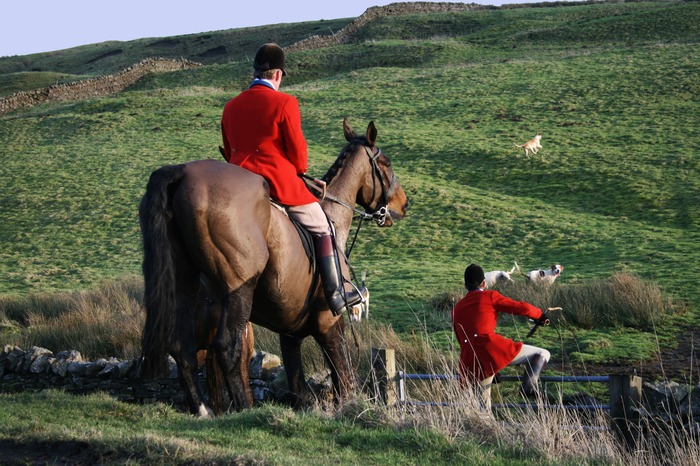
Horseback hunting gatherings were long associated with Boxing Day in some rural parts of Britain. The current situation is, however, very different from traditional fox hunting.
In England and Wales, the Hunting Act 2004, which came into force in 2005, prohibits the hunting of wild mammals with dogs, except in certain circumstances provided for by law.
Trail hunting developed as an alternative: dogs follow a prepared scent trail rather than a fox being hunted. The practice is itself the subject of legal and political debate, and its regulation may continue to change.
Boxing Day takes place every year on 26 December, the day after Christmas. When the date falls on a weekend, the official bank holiday may be moved to a substitute weekday.
Boxing Day is associated with a bank holiday in the UK. Bank holiday calendars nevertheless differ between England and Wales, Scotland and Northern Ireland. In 2026, 26 December falls on a Saturday and the substitute bank holiday is Monday 28 December.
The name is thought to be linked in particular to Christmas boxes containing money, gifts or food that were given after Christmas to servants, employees and people in need. Several traditions probably contributed to the origin of the name.
Many shops open on 26 December and offer post-Christmas promotions, but opening hours vary between retailers. Some shops may also remain closed.
advertisement
Many retailers traditionally offer promotions around 26 December. However, this is not a sales period with identical discounts everywhere: dates and reductions are set by individual retailers, and some promotions begin before Boxing Day.
Public transport services may operate in London on 26 December, but they are generally different from normal services and vary by line. Check the schedules published for the relevant year. The national rail network, meanwhile, is very limited on Boxing Day.
Yes. London is considerably more active on 26 December than on Christmas Day. Shops, attractions and shows start operating again, but you should check individual opening hours and plan your journeys around reduced transport services.
Boxing Day is mainly associated with the UK and several countries that inherited British traditions, including Canada, Australia and New Zealand. Its official status and associated traditions are not exactly the same everywhere.
Boxing Day is celebrated on 26 December and has its origins in several British traditions linked to gifts, donations and Christmas boxes. Today, it is notably associated with family gatherings, football and post-Christmas promotions.
In London, many shops and some attractions resume activity on 26 December, but transport remains disrupted. In 2026, Boxing Day falls on Saturday 26 December and its substitute bank holiday takes place on Monday 28 December. If you are in London during this period, check attraction opening hours and transport services separately before each journey.
Planning your trip? These are the tours and tickets travellers book most.