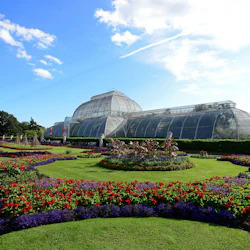
Kew Gardens: Royal Botanic Gardens
Take a breath of fresh air in the Royal Botanic Gardens at Kew Gardens!
From
6 €

AllTrippers
 Culture
The University of Cambridge, synonymous with academic excellence and rich with centuries of history, stands as a favored destination for tourists from around the world. Founded in 1209, it is the second oldest university in the English-speaking world and has been the stage for numerous major scientific and literary advancements. Cambridge is not just an institution of higher education; it is a pillar of knowledge, bearing witness to historical, cultural, and intellectual evolutions over time.
advertisement
The foundations of this prestigious institution rest on its autonomous colleges, each with its own character and unique traditions. These colleges, beyond their architectural beauty, are the custodians of a rich and varied academic life. They have been the home to many iconic figures, such as revolutionary scientists, renowned writers, and influential political personalities, thus shaping global history.
The significance of Cambridge in the academic world is undeniable. It has played a fundamental role in the development of modern thought, influencing fields as diverse as science, literature, and politics. Its community of alumni, comprised of Nobel Prize laureates, political leaders, and pioneers in all sectors, attests to its enduring impact on the world.
Visiting the University of Cambridge is like taking a journey through time, where each building, each garden, and each lecture hall tells a story of discovery and innovation. It is a unique opportunity for visitors to explore a place where historical past and current intellectual fervor combine, offering an exceptional panorama of this illustrious institution's contributions to history and society.
The history of the University of Cambridge dates back over 800 years, establishing this institution as one of the oldest and most respected in the world. Founded in 1209 by scholars fleeing Oxford after a conflict, Cambridge quickly established itself as a center of academic excellence, becoming a symbol of knowledge and innovation.
The origins of Cambridge are marked by a quest for intellectual freedom, initiated by scholars eager to create a space for study and reflection away from the tumults of Oxford. With the granting of its first royal charter by King Henry III of England in 1231, Cambridge gained autonomy and privileges that laid the groundwork for its future organization. The establishment of Peterhouse in 1284, the first college, marked the beginning of a tradition of independent colleges that today form the heart of the university.
The history of Cambridge is punctuated by expansions and renewals, both academically and physically. The creation of iconic colleges such as Trinity and King's, founded in 1546 and 1441 respectively, set new standards in knowledge and architecture. Their contribution to the academic and cultural landscape has shaped the identity of Cambridge. Over the centuries, the university has been a fertile ground for innovation, as evidenced by the major scientific advances made during the Scientific Revolution, thanks in part to figures like Isaac Newton.
The 17th and 18th centuries were particularly prolific, seeing Cambridge transform and adapt to the changing needs of society and the academic community. The expansion of taught disciplines, particularly with the introduction of the sciences, marked a turning point in the educational approach and contributed to Cambridge's global reputation as a center of research and innovation.
Cambridge has continued to play a pivotal role in academic and social history, influencing educational reforms and contributing to the intellectual formation of personalities who have left their mark on the world. In the 19th and 20th centuries, it continued to evolve, adapting to contemporary challenges while remaining true to its core values of excellence and the pursuit of knowledge.
By embracing modernity without abandoning its traditions, the University of Cambridge has managed to remain a pillar of education and research, influencing generations of leaders, thinkers, and innovators. Its history is a testament to the uninterrupted commitment to the advancement of knowledge and significant contribution to the global society.
Colleges are the heart of life at University of Cambridge, each with its own heritage, culture, and traditions. These autonomous institutions are not just places of residence and learning, but also dynamic social and cultural centers for students and academics.
Many colleges, such as the famous King's College or the picturesque Queens' College, offer guided tours that reveal centuries of history and academic innovation. These tours provide a unique glimpse into university traditions, architectural achievements, and fascinating anecdotes about former students and professors. Specialized tours can also be arranged for those interested in specific topics, such as the history of science or literature.
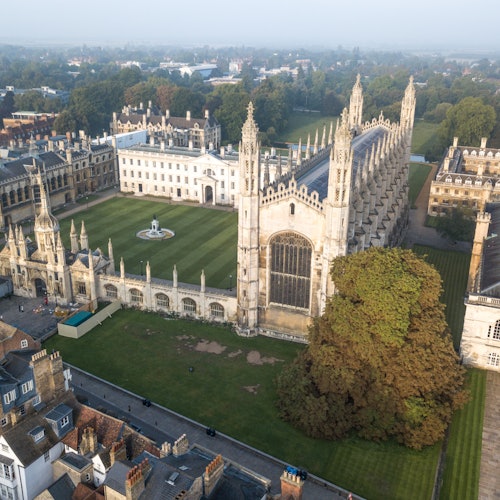
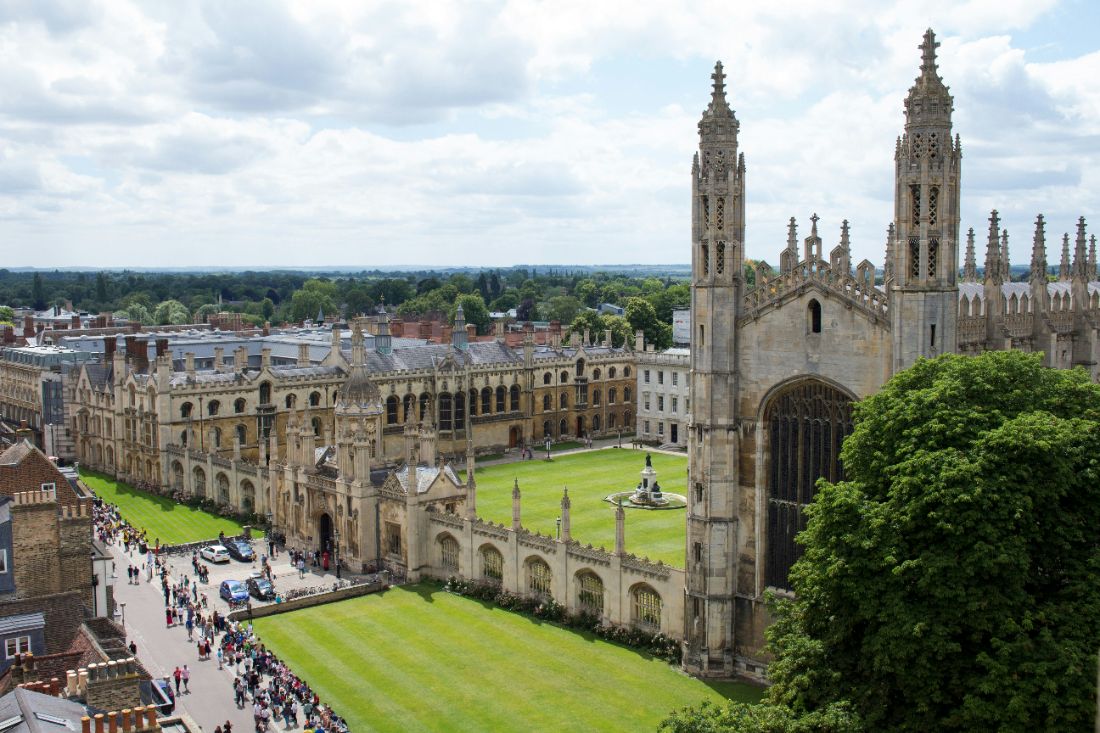
King's College, founded in 1441 by King Henry VI, is famous for its chapel, considered a masterpiece of Gothic architecture, an emblem of the university, and a symbol of the city of Cambridge. With its vaulted ceiling and colorful stained glass, the chapel of King's College is a must-see landmark that attracts visitors from all over the world. Known for its exceptional acoustics, it hosts the college choir for Christmas concerts broadcast internationally, offering moments of sublime musicality.
The architecture of the King's College Chapel beautifully blends Gothic and Renaissance styles, offering an impressive visual spectacle. Visitors are often awestruck by its majestic exterior before exploring the interior to admire its famous narrative stained glass windows and ornate altarpiece, which are among the artistic treasures of Cambridge.
Beyond its architectural beauty, King's College is an active cultural hub. It hosts various musical events, including the famous Nine Lessons and Carols service during the Christmas season, whose masterful musical performances attract listeners from around the world.
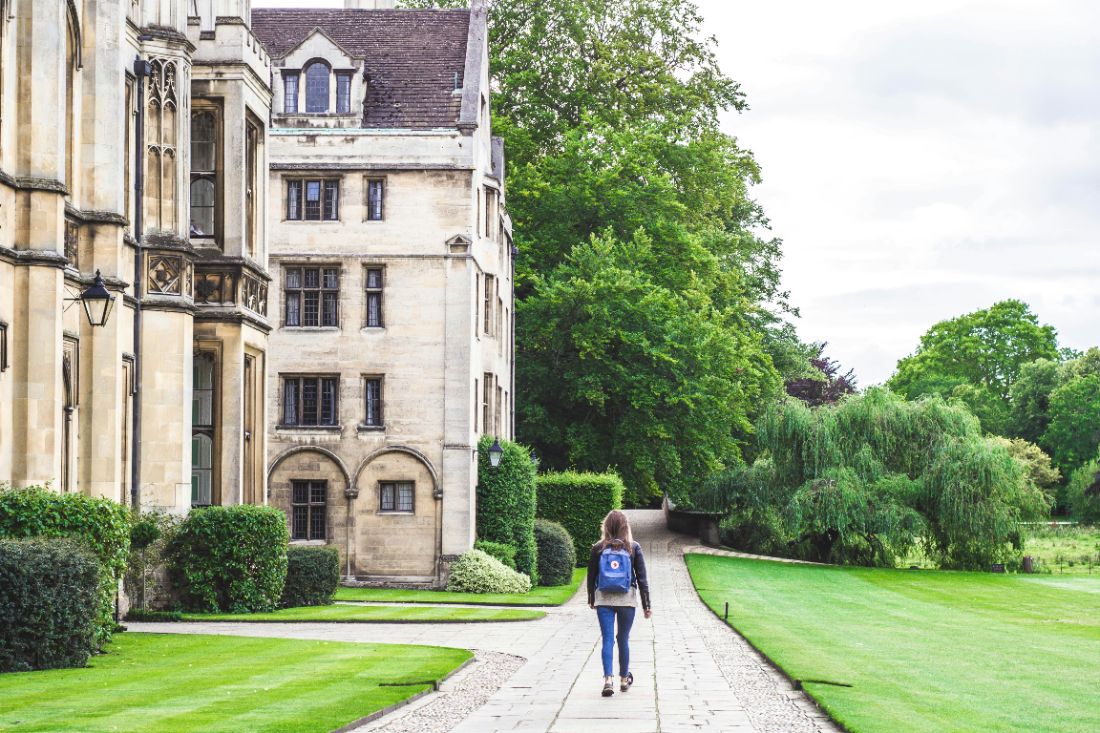
Trinity College, established by Henry VIII in 1546, is the largest and one of the most prestigious colleges of Cambridge. Famous for its notable alumni such as Isaac Newton and several British prime ministers, Trinity is a bastion of academic excellence.
Trinity College has always been a melting pot of innovation and knowledge, where major historical figures have studied and worked. Its significant contribution to various intellectual and scientific fields attests to its importance in the history of education and research.
The Wren Library, designed by architect Christopher Wren, is a place of historical and cultural significance. Famous for its remarkable architecture and precious book collections, including manuscripts and rare editions of Isaac Newton, the Wren Library solidifies Trinity's status as an exceptional center of scholarship.
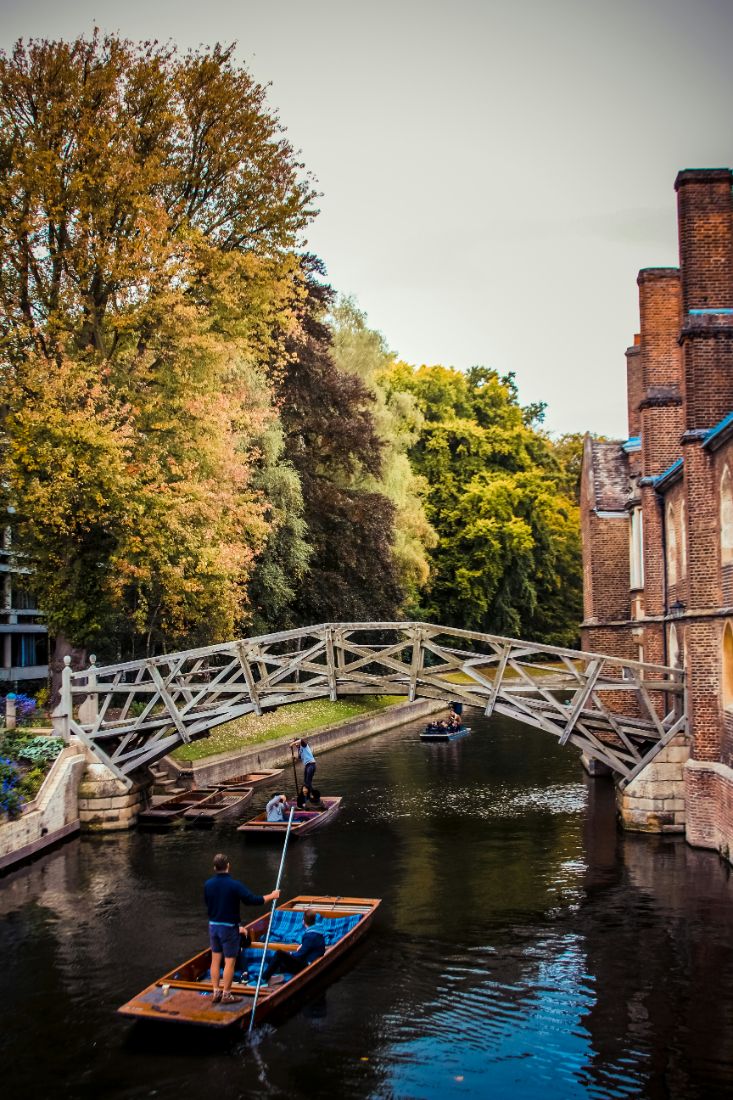
Among the 31 colleges of Cambridge, Queens' College and St John's College also stand out. Queens' College is renowned for its Mathematical Bridge, an engineering feat surrounded by legends, while St John's College, with its lush gardens and historic buildings, offers a glimpse into the architectural and natural heritage of the university.
The Mathematical Bridge is a wooden bridge that spans the River Cam to connect the two parts of Queens' College separated by the river. It is famous for its ingenious design - often mistakenly attributed to Isaac Newton - and its nail-less construction. Designed by William Etheridge and built by James Essex, this iconic bridge symbolizes the fusion of beauty and logic, captivating visitors and architecture enthusiasts alike.
St John's College is famous for its picturesque setting, meticulously maintained gardens, and Gothic buildings that evoke the deep history and tranquility. These green spaces offer a place of respite and contemplation amidst the academic bustle.
The University of Cambridge is a true cultural epicenter, also home to several museums and art galleries. These places, veritable treasure troves of knowledge and culture, offer visitors captivating insights into history, art, archaeology, and science.
The Fitzwilliam Museum is a highlight of Cambridge's cultural scene, renowned for its rich and diverse collections of art and antiquities. This museum allows visitors to travel through different eras and civilizations, exploring works ranging from Egyptian antiquity to modern art. Its exhibits include paintings by European masters, ancient ceramics, rare coins, and a variety of decorative objects, each piece telling a part of human history.
The Museum of Archaeology and Anthropology (MAA) in Cambridge is another gem, showcasing an impressive collection of artifacts that illustrate the diversity of human culture across time and space. Stone Age tools, tribal sculptures, ancient textiles, and artifacts from vanished civilizations are displayed, offering unique perspectives on the lifestyles, beliefs, and arts of ancient and contemporary societies.
As for the university's science museum (Whipple Museum of the History of Science), it highlights the significant contributions of Cambridge in the fields of science and technology. From physics to biology, astronomy to computer science, the museum exhibits discoveries and inventions that have changed the world. From historical scientific instruments to modern interactive exhibits, the museum reveals the processes of scientific thought and the impact of science on our daily lives.
The life at the University of Cambridge is deeply rooted in a rich academic tradition and community events that shape a unique experience for its students and staff. This distinctive atmosphere combines historical heritage with intellectual dynamism, creating an environment conducive to learning and personal growth.
At the heart of the academic experience at Cambridge is the tutorial system, a teaching method that emphasizes personalized guidance. Students benefit from individual or small group follow-up, facilitating direct and meaningful interaction with teachers. This pedagogical model allows not only for personalized learning but also for the development of critical thinking and intellectual autonomy. Tutors, often experts in their field, guide students through in-depth discussions, case studies, and detailed analyses, promoting a thorough understanding of the subjects studied.
The traditions at Cambridge are not limited to classrooms and tutorials. They are also expressed through annual ceremonies and rituals that punctuate university life. The Matriculation and the Congregation are among the most emblematic moments, marking respectively the entry of new students into the university community and the celebration of their academic achievements during graduation. These events, imbued with solemnity, are an opportunity to celebrate centuries-old traditions and reinforce the sense of belonging to the institution.
The formal dinners in the colleges are another pillar of Cambridge traditions. These occasions, where students and professors gather for meals in academic attire, are not just moments of conviviality; they are rituals that perpetuate the history and customs of the university. These dinners, often candlelit and followed by speeches or presentations, maintain a link with the past and strengthen the academic community. They are an essential part of the social and cultural experience at Cambridge.
The University of Cambridge is not only renowned for its academic excellence, but it has also been the cradle of numerous significant advancements and the alma mater of iconic figures in various fields, from science to literature and politics.
Cambridge has a long-standing tradition of scientific excellence, as illustrated by the discoveries and work of some of its former students and faculty members. Personalities such as Sir Isaac Newton, whose laws of motion and the theory of universal gravitation revolutionized physics; Charles Darwin, whose theory of evolution by natural selection transformed biology; and Stephen Hawking, whose work on black holes and cosmology opened new horizons in the understanding of the universe, are all associated with Cambridge. Their contributions have not only advanced their respective fields but have also had a profound impact on modern science and changed the way we understand the world.
Beyond the sciences, Cambridge has also had a profound influence on the arts and letters. Writers such as John Milton, whose work "Paradise Lost" is a cornerstone of English literature; Lord Byron, a central figure of the Romantic movement; and Sylvia Plath, whose poetry and writings explored complex themes of identity, suffering, and femininity, all attended this illustrious institution. Their legacy continues to inspire and influence generations of readers and writers around the world.
The influence of Cambridge also extends to the realm of politics and social change, with alumni like Oliver Cromwell, a key political and military leader in British history, and contemporary figures such as Sir David Attenborough, whose work as a naturalist and presenter has raised public awareness about the importance of nature conservation and biodiversity.
advertisement
For tourists interested in history, architecture, and education, Cambridge offers a multitude of attractions and activities that captivate the mind and nourish the soul. This historic university town blends ancient charm with intellectual dynamism, providing a rich and varied experience.
The city of Cambridge is easily accessible by train from London, with a journey of about 45 minutes from King's Cross station.
Highways and main roads connect Cambridge to the surrounding major cities and to other tourist sites in the region, making access by car easy. Local buses and coach services also offer convenient alternatives for those who prefer public transportation.
Keep in mind that the University of Cambridge is a place of study for many students. Be respectful when visiting colleges and academic spaces, and avoid disrupting classes or study areas.
Exploring the University of Cambridge means diving into a world where knowledge, history, and culture meet at every street corner. Each college, with its centuries-old buildings, each museum, brimming with artistic and scientific treasures, and each garden, meticulously maintained, tells a facet of the story of this legendary institution. These elements weave together the rich tapestry of Cambridge, offering visitors a deeply rich and varied experience.
Lovers of academic excellence will be fascinated by the tales of discoveries and scholars that have marked Cambridge, while history enthusiasts can travel back in time, crossing centuries of living traditions. Architecture buffs will find their delight among the Gothic masterpieces, classical buildings, and modern constructions, reflecting the passage of time and the evolution of knowledge.
Cambridge, as a symbol of cutting-edge education and research, remains a beacon of inspiration, prompting visitors to reflection and admiration. It is a place that not only enriches intellectually but also inspires the pursuit of knowledge and the appreciation of the wonders of our world.
Visiting the University of Cambridge is to offer oneself an unforgettable experience, a journey through time and knowledge, where each stone and each page opens the door to priceless stories and discoveries.
Planning your trip? These are the tours and tickets travellers book most.